Ramadan in Tokyo unfolds in a rhythm that feels both familiar and quietly different. For Muslims living away from home, the sacred month becomes a beautiful reminder that faith travels with us, even across continents.
One of the noticeable differences when observing Ramadan in Japan is the fasting duration. Compared to many Muslim-majority countries, the fasting period in Tokyo during early spring is relatively shorter, offering a gentle pulse to the daily cycle of sahur (the meal taken before dawn before the daily fast) and iftar (the meal that breaks the fast at sunset during Ramadan). For the Malaysian diaspora in Tokyo, the beginning of Ramadan is observed in accordance with the announcement made by the Ruyat-e-Hilal Committee Japan, the organisation responsible for determining the start of the holy month through the sighting of the new moon. The committee also consults the Islamic authorities in Malaysia, ensuring that Malaysian Muslims living in Japan remain spiritually aligned with the observance back home.
Despite being a city better known for neon lights and bustling train stations, Tokyo quietly hosts a growing Muslim community. Tokyo is becoming increasingly inclusive for Muslim travellers, offering a range of halal-friendly options, evident in its restaurants, lodgings, places of worship, and shops. The city is home to several mosques, including the iconic Tokyo Mosque, also known as Tokyo Camii & Diyanet Turkish Culture centre, a significant cultural and religious landmark widely recognised as the largest mosque in Japan and a central hub for Islamic activities in the capital.
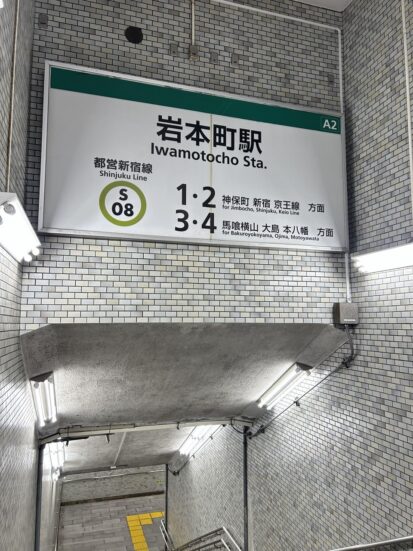
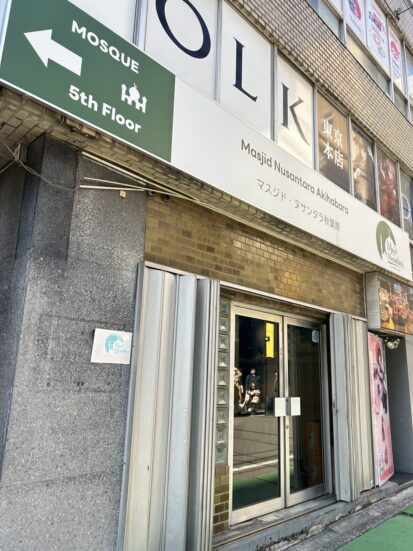
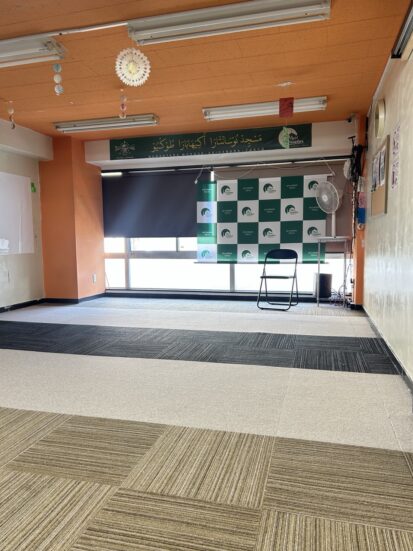
Yet, beyond the grandeur of large mosques, smaller prayer spaces often become the heart of Ramadan gatherings. Tucked within the lively district of Akihabara is Masjid Nusantara, located just a short walk from the Iwamotocho Station. A Masjid is a sacred place where Muslims pray, globally referred to as a mosque or camii. Nusantara is an old Javanese word resembling the islands of Indonesia and Malaysia. Established by Indonesian volunteers in 2019, the mosque serves as a welcoming sanctuary for Muslims living and working in the surrounding area. During Ramadan evenings, the modest prayer space transforms into a vibrant gathering point. As sunset nears, the Muslim community gathers quietly, waiting for the call to prayer for Maghrib, signalling the end of the day’s fast. When the adhan softly fills the room, everyone breaks their fast together in a simple yet meaningful ritual of having dates and water.

Following the Maghrib prayer, the mosque often serves a variety of Asian dishes for iftar throughout the month, reflecting the multicultural Muslim community in Tokyo. Conversations flow easily across languages and cultures as students, professionals, and travellers gather around shared meals.
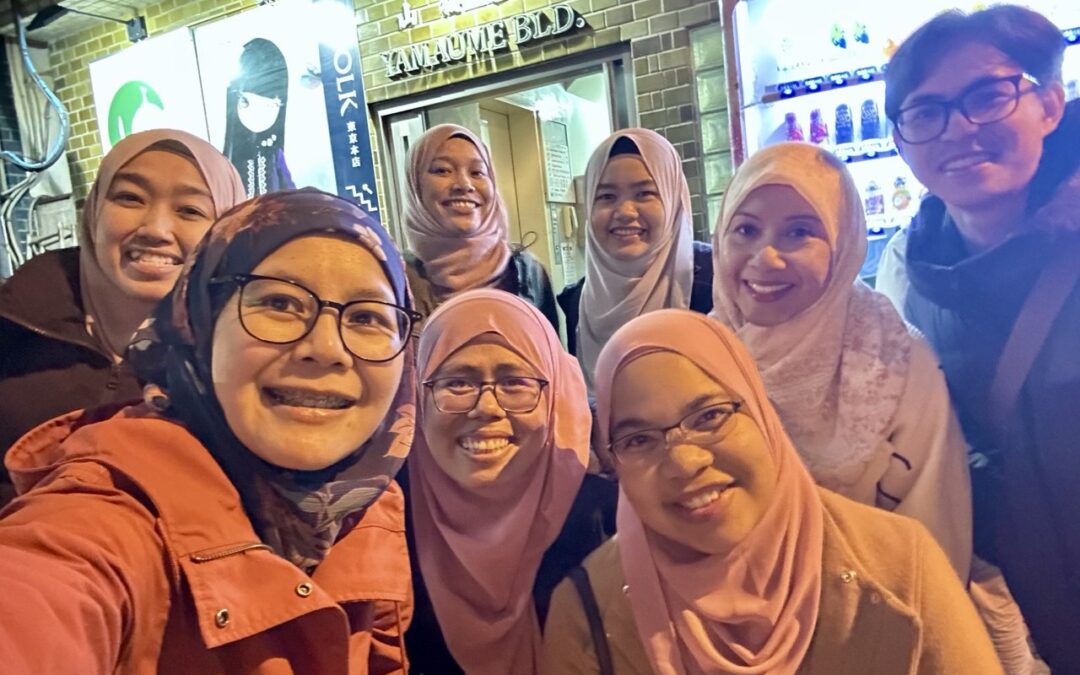
Among them are Malaysian students, including alumni and scholars from Universiti Teknologi Malaysia (UTM) and Malaysia-Japan International Institute of Technology (MJIIT), UTM Kuala Lumpur, who frequently visit the mosque for iftar and the special tarawih prayers whenever academic or work commitments allow. For many, these evenings recreate a small piece of home in a foreign land.
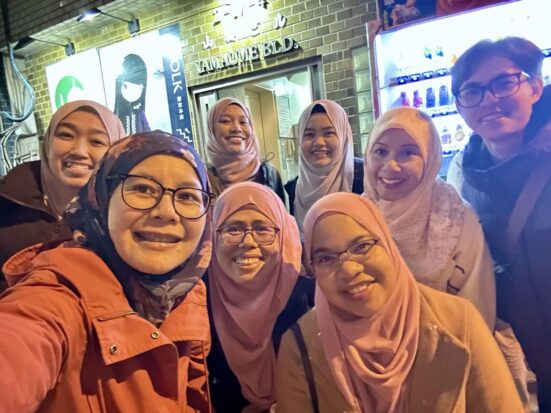
Several Malaysians working in Tokyo also join the soulful gatherings, forming a close-knit circle that celebrates the spiritual essence of Ramadan together. In these moments, between prayers and solitude, shared meals, and quiet reflections, the distance from home seems to fade. Ramadan in Tokyo may be quieter than the festive nights in Malaysia, yet its beauty lies in its simplicity. In small mosques tucked between office buildings and city streets, the spirit of Ramadan continues to flourish, carried by a global Muslim community united by faith, gratitude, and togetherness.
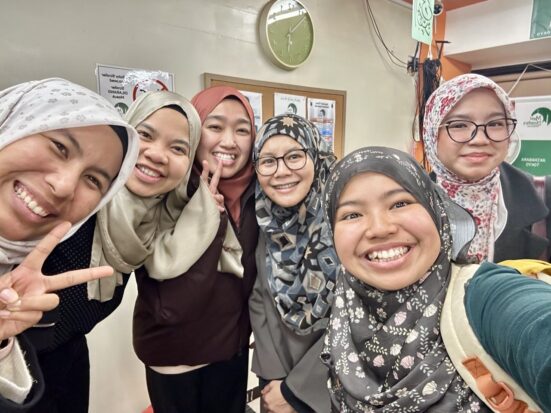
Masjid Nusantara is a mosque occupying several rooms in the Yamaume Building, Chiyoda City, Tokyo. On the 4th and 5th floors, there will be two separate prayer rooms for women and men, respectively. Beyond prayers, the mosque becomes a welcoming space for study circles, quiet conversations, and shared meals among friends. For Muslims living and working nearby, it offers a moment of peace, reflection, and connection.
By Assoc. Prof. Dr. Norhayati Abdullah from the Malaysia-Japan International Institute of Technology (MJIIT), UTM Kuala Lumpur, who currently serves as a Fixed-term Special Appointed Associate Professor at the Graduate School of Environmental and Information Studies, Tokyo City University, Japan. She frequents Masjid Nusantara during her stay in Tokyo throughout Ramadan 1447H.