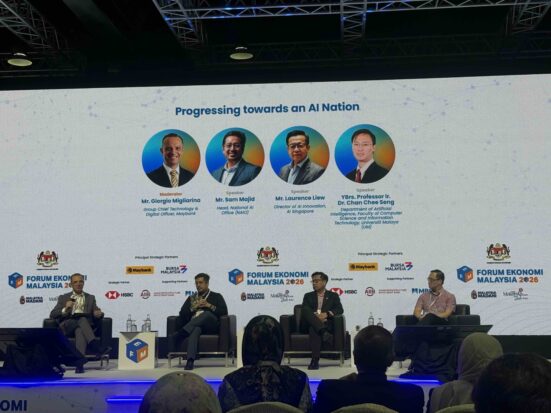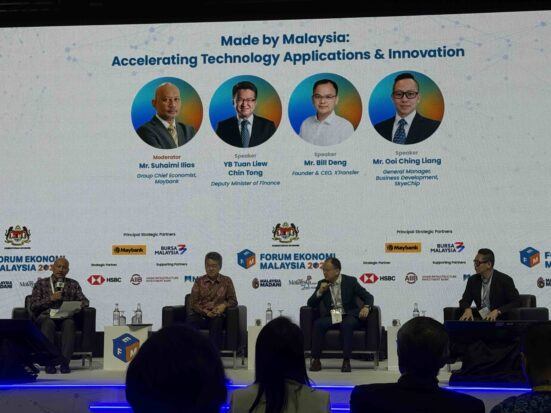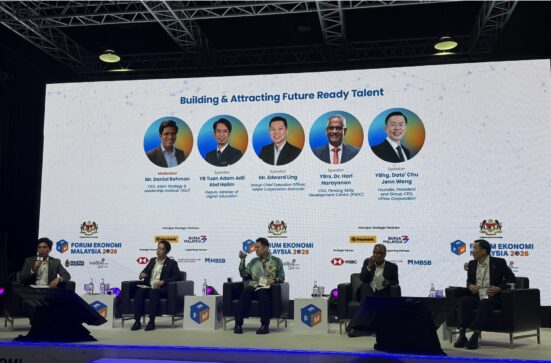
Having the opportunity to attend the Malaysia Economic Forum (FEM) 2026 on 5 February 2026 was not one to be missed, particularly for an academic like myself with prior experience advising the Ministry of Transport and the ASEAN Maritime Transport Working Group on policy matters related to maritime and port development. The forum was regarded as comparable in importance to the World Economic Forum, albeit on a smaller national scale, as it provided a concentrated space where Malaysia’s economic narratives were openly questioned and tested against current realities.
Having only recently reported for duty at the Malaysia–Japan International Institute of Technology (MJIIT), following three years of service in an agency under a ministry outside the higher education ecosystem, the forum compelled me to recalibrate my understanding of what should be taught, how talent ought to be prepared, and how academia must respond in practice.
The back-to-back parallel sessions, which centred on national ambition and institutional responsibility, made the one-day forum particularly relevant. Discussions extended beyond growth figures and fiscal indicators, critically interrogating whether Malaysia’s education and innovation systems remain structurally aligned with the pace of global change.
The forum opened with a paradox that framed much of the discourse. While Malaysia’s overall unemployment rate remains close to 3.3 per cent, youth unemployment hovers at around 10 per cent. Approximately 70 per cent of graduates are employed in semi-skilled or low-skilled jobs, with only 30 per cent securing high-skilled roles. This persists despite sustained investment in education and continuous talent production, signalling a misalignment between what the education system produces and what industry demands.
This misalignment becomes more apparent when viewed through industries central to Malaysia’s aspiration to move up the value chain. A contradiction resonant within universities was highlighted: despite producing a large talent pool, Malaysia continues to face shortages in sectors such as electronics and integrated circuit design. These industries are undergoing rapid transformation from backend assembly to high-value front-end design, yet the constraint lies not only at entry level but also in experienced talent density. Designing a single chip requires between 150 and 200 engineers across the entire value chain, a scale Malaysia is currently unable to sustain consistently.
Although Malaysian engineers are highly regarded globally, multinational corporations actively recruit them, reducing the domestic pool of high-quality talent. Retention becomes increasingly difficult due to significant salary differentials. This labour market challenge reflects broader struggles across both the education and industry ecosystems, not only in producing graduates, but in sustaining experience, continuity, and depth.
At its core, this challenge is rooted in the education system, particularly among those entrusted with shaping learning itself: academia. While the recently launched National Education Blueprint 2026–2035 (RPN 2026–2035) rightly emphasises competency and attitude, industry players noted that many graduates struggle to connect theoretical knowledge with real-world application. More uncomfortably, it was acknowledged throughout the forum that many academics themselves lack sufficient exposure to current industry practices.
With the rapid emergence of artificial intelligence (AI), knowledge now evolves at a pace that far exceeds curricular revision cycles. Without meaningful exposure to industry realities, relevance becomes increasingly difficult to sustain. There was strong consensus among panellists that academics require structured “overhauling” over three to five years through industry, policy, or applied environments. Effective student learning, it was argued, often stems not from content delivery alone, but from lived experience—where decisions, successes, failures, and trade-offs are shared honestly.
The gap between knowledge creation and real-world application also extends into the research and innovation ecosystem. Malaysia’s research and development landscape remains characterised by approximately 60 per cent government spending and 40 per cent private sector spending, despite a national target to reverse this ratio by 2030. The issue, however, is not solely the quantity of research output, but the persistent “potholes” along the commercialisation pathway.
Industry panellists observed that existing incentives largely reward universities up to the prototype and indexed publication stages, with limited traction beyond. Intellectual property practices tend to favour higher education institutions, leaving private sector players reluctant to license technologies due to uncertain returns on investment, extensive documentation requirements, and costly validation processes.
The forum therefore highlighted the need for milestone-based incentives, where innovators are rewarded for progress beyond familiar comfort zones of prototypes and publication quartiles. A performance scorecard was proposed to incentivise best-performing companies, shifting focus from activity and compliance towards measurable national impact. Such recalibration is critical in a world where economic and technological shifts are no longer linear, but rapid and unpredictable.
AI featured prominently at FEM 2026 as both an economic opportunity and a governance challenge. It was estimated that AI-related activities could contribute up to 7 per cent of global GDP by 2034. Yet AI operates within a space of “unknown unknowns”, where risks cannot be fully anticipated, requiring governance frameworks to evolve alongside deployment.
Globally, responses vary. The European Union introduced the AI Act in 2024, while Malaysia’s establishment of the National AI Office (NAIO) marks an important first step. Singapore offers a contrasting model through AI Singapore (AISG), launched in 2017, which focuses on funding university research and strengthening academia–industry linkages without a dedicated AI Act. This underscores a key principle: regulation is necessary, but it must be flexible and implemented with speed.
Policymakers must allow programmes to be implemented, tested, and refined within shorter cycles. In fast-moving AI ecosystems, action cannot wait for perfect policy. Talent development must come first, supported by timely investment. This context also demands careful interpretation of the growing number of schools of AI worldwide. While positioning AI as a formal academic domain signals commitment, the forum repeatedly emphasised that AI is fundamentally an enabler, not an end in itself.
AI does not create value in isolation; its impact emerges only when embedded within domain knowledge such as engineering, agriculture, education, finance, or governance. As observed during the forum, an accountant equipped with AI is more valuable than AI alone, and this logic applies across disciplines.
From this perspective, schools of AI should not operate in silos but function as horizontal enablers across faculties, ensuring AI capability permeates teaching, research and development, and real-world problem solving. This aligns with the National AI Roadmap 2021–2025 and the forthcoming National AI Technology Action Plan 2026–2030, which emphasise infrastructure, governance, and interconnected sectoral roadmaps. Micro, small, and medium enterprises, in particular, should not wait for government direction but develop AI frameworks aligned with national intent.
Panellists also agreed that while AI will replace certain jobs, it will create new ones. The central issue is therefore talent empowerment rather than displacement. AI should be treated as an enabler guided by human judgement and domain expertise. The responsibility lies with individuals and institutions to harness AI as a tool that enhances productivity and supports better decision-making.
Ultimately, the message from FEM 2026 extends beyond technology or policy trends. It is about recognising the responsibility shared by universities, policymakers, and industry to realign intent with execution. For academia, the forum demands more than acknowledgement. Universities require recalibration in how knowledge is framed, how experience is integrated into teaching, and how talent is prepared for realities that are neither linear nor predictable. Research and development must translate into value, and talent development cannot be detached from real exposure, continuity, and depth.
For me, FEM 2026 served as a timely reminder that relevance must be consciously renewed. What is taught, how it is taught, and why it is taught must continuously respond to national priorities and global shifts, rather than rely on inherited structures or historical success.