
Malaysia-Japan International Institute Technology (MJIIT)
Algae and Biomass Research Lab
The goal of establishing this research lab is to address the research demands linked with advances in the industrial revolution, notably in the field of algae. In general, the main focus of the research is to tackle issues related to green technology involving renewable energy and biomass production, carbon dioxide reduction and the greenhouse effect using the algae species, especially microalgae, which might be further applied for commercialisation. Aside from microalgae strains obtained from other regions, the indigenous species of microalgae isolated in Malaysia were also being utilized extensively in our research lab.
Basic Information
iKohza Name: Algae and Biomass Research Lab
Leader's Name and Title: Koji Iwamoto (Assoc. Prof. Dr.)
Deputy Leader (if any): Shaza Eva binti Mohamad (Assoc. Prof. Dr.)
Main Contact Email: algaebiomassikohza@gmail.com
Location/Office: X2-01, MJIIT UTM KL
Website or Social Media (if available): https://mjiit.utm.my/algae/
Research Focus Areas
Main Research Themes/Keywords:
Microalgae, Fatty acids, Bioremediation, Biopolymer, Waste water, Bioenergy, Biocoke, Azolla
Description of Research Focus Areas (Max 200 words):
Microalgae, microscopic powerhouses, offer a multifaceted approach to sustainable solutions. Their ability to thrive in wastewater makes them ideal for bioremediation, effectively cleaning polluted water bodies. Beyond their cleanup capabilities, microalgae are rich in fatty acids, making them a prime candidate for bioenergy production. These lipids can be converted into biofuels, offering a renewable alternative to fossil fuels. Apart from that, fatty acids derived from microalgae are highly versatile and have a wide range of applications in pharmaceuticals, cosmetics, and personal care products, including the most well known key product, which is omega-3 fatty acids. Furthermore, certain microalgae strains can be harnessed for the production of biopolymers, reducing reliance on petroleum-based plastics. The biomass remaining after lipid extraction can even be processed into biocoke, a sustainable alternative to traditional coke used in industrial processes. Meanwhile, the robust and resilient aquatic fern-like Azolla is well known to be harvested for the production of livestock feed as well as biofertilizer. This integrated approach highlights the immense potential of microalgae in addressing environmental challenges and fostering a circular economy.
Facilities and Equipment
Laboratories Used (if applicable):
Key Equipment/Technology Available :
The microalgae cultivation and other major lab activity are mostly conducted in the main research area well equipped with equipment such as laminar airflow cabinet, fume hood, ultrapure water system machine, growth chamber etc. Meanwhile, the up-scale experiments for mass production would be done in the outdoor and greenhouse area where the available facilities such as raceway ponds, 20L bottle culture flask, panel and U-shape reactor with proper temperature and carbon dioxide supply system are located to cater the large scale research works.
Research Projects
List of Ongoing/Recent Projects or Grants :
- Growth Enhancement Of Azolla By Supplementary Light For Sustainable Biomass Production
- Penggunaan Azolla dalam Makanan Ayam: Inovasi untuk Penjimatan Kos, Peningkatan Kualiti Makanan, dan Kesihatan Ayam
- Validation and Analysis of the Algae Wheel System at IWK Wastewater Treatment Plant
Research Outputs
Selected Publications :
- Sahabudin, E., Kubo, S., Yuzir, M. A. M., Othman, N. A., Nadia Md Akhir, F., Suzuki, K., … & Iwamoto, K. (2024). The cadmium tolerance and bioaccumulation mechanism of Tetratostichococcus sp. P1: insight from transcriptomics analysis. Bioengineered, 15(1), 2314888.
- Zahra, S. A., Purba, L. D. A., Abdullah, N., Yuzir, A., Iwamoto, K., Lei, Z., & Hermana, J. (2023). Characteristics of algal-bacterial aerobic granular sludge treating real wastewater: Effects of algal inoculation and alginate-like exopolymers recovery. Chemosphere, 329, 138595.
- Jusoh, N., Rahim, M. Q. F. A., Othman, F. S., Mohamad, S. E., & Abdullah, N. (2023). Isolation and characterization of biological soil crust forming algae from Malaysia. In IOP conference series: Earth and environmental science (Vol. 1144, No. 1, p. 012003). IOP Publishing.
- Abd Karim, F. F., Mohamad, S. E., & Iwamoto, K. (2024). Production of Omega-3 Fatty Acids and Astaxanthin from Chlorella vulgaris and Haematococcus pluvialis Cultivated in Chicken Manure Medium. Journal of Advanced Research in Micro and Nano Engineering, 19(1), 78-85
Patents (if any):
- Isolation And Purification Method To Obtain Acid Tolerance Microalgae From Acidic Peatland Water (Ip/Cr/04261)
- Resource Recovery From Algal-Bacterial Aerobic Granular Sludge Upon Municipal Wastewater Treatment(Ip/Cr/03826)
- Formulation Containing Protease Produced By Bacillus Pumilus (Genbank Accession Code: Mn807299) And Application For Chronic Wound Debridement(Ip/Cr/02786)
- The Cultivation And Potential Application Of Microalgae (Ip/Cr/02649)
- Methods For Monitoring And Assessing The Impacts Of Algae Blooms In Aquaculture Area Using The Marine Dinoflagellate Karlodinium Zhouanum (Dinophyaceae) As Biomarker (Ip/Cr/01427)
Collaboration and Outreach
Current National and International Collaborations:
- Nippon Koei Co., Ltd. Japan
- Euglena Co., Ltd. Japan
- Jabatan Kerja Raya (JKR) Malaysia
- Indah Water Konsortium (IWK)
Joint Programs/Student Exchanges/Industrial Engagements:
Community Engagement (if any):
Members
Academic Staff (Name, Position, Area of Expertise):
- Koji Iwamoto (Associate Professor Dr.: Plant and algal physiology, Microbiology, Environmental engineering)
- Shaza Eva Mohamad (Associate Professor Dr.Environmental Biotechnology, Microalgae Biotechnology, Enzyme and Biocatalysis)
- Norhayati Abdullah (Associate Professor Dr.: Environmental Engineering; Microalgae aerobic Ggranulation; environmental sustainability studies; wastewater treatment)
- Fatin Syahirah Othman (Senior Lecturer Dr.: Biotechnology, Environmental Engineering, Microalgae, Biofuel)
- Pauziah Muhammad (Associate Professor, Ir. Dr.: Vibration Control, Structural Vibration, Suspensions, Structural Dimensions)
- Nurul Zainab Binti Along (Senior Lecturer Dr.: Marine, Indigenous Local Knowledge, Disaster Risk)
Postdocs/Researchers:
Postgraduate Students:
- Fatin Fazira binti Abdul Karim
- Sabrina Aghazada
- Anas Aldailami
- Muhammad Iskandar bin Shamsudin
- Nurlydia binti Mohd Azmil
- Nurul Athirah Hasran
Photos and Media
-

- Potential collaboration with Chinese Academy of Science, Kunming, China
-
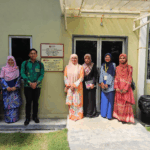
- Collaborators from Pusat Sains Negara (Feb 2025)
-
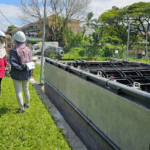
- Collaboration with Indah Water Konsortium (Jan 2025)
-

- Research collaboration with PWD Smarfarmability (March 2025)
-
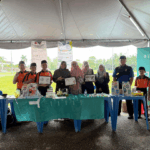
- Microalgae Research activity at STEM Carnival, SAM Muhammadiah, Pekan Sabak (April 2025)
-
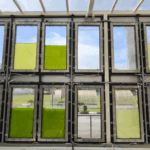
- FYP 2024/2025: Growth of microalgae using panel photobioreactor or biofertilizer production
-
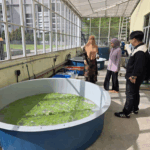
- KPT UNIMadani Grant – Collaboration with SK Kepong (May 2025)
-

- Raceway pond- cultivation of microalgae Chlorella sp.
-
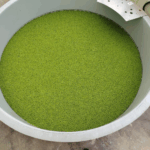
- Growing Azolla using open pond bioreactor
-
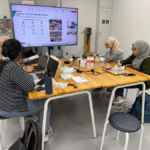
- Scholars spending research time at Euglena
-
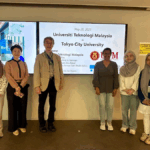
- Professor Koji Iwamoto and Ms. Kultira from the AUN/Seed-Net alongside Albio scholars during mobility exchange at Tokyo City University, May 2025
-

- Albio scholar Ms. Nurul Athirah presenting a token of appreciation to Professor Lai, at University of Tsukuba during algae laboratory visit, July 2024
-
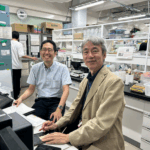
- Professor Koji Iwamoto during a project discussion with Dr Yoshiaki Maeda at University of Tsukuba, July 2024
